QR codes for retail stores
In a shop, a QR code answers the questions a shelf tag has no room for: what is it made of, does it come in blue, what do other buyers think, and is there one in the back? It also keeps working after closing time, when a code in the window can take an order from someone looking in.
Retail codes are printed in large numbers and stay up for months, so mistakes are expensive. Dynamic codes let you fix a wrong link or move a campaign without reprinting a single tag, and per-code scan counts show which displays people actually use.
QR code ideas for retail stores
Product details on the shelf tag
Link each tag to the product page with sizes, materials, care instructions and reviews, so a shopper can decide without finding a staff member.
Window shopping after closing
A large code in the window that opens the online shop or this week's featured product turns evening foot traffic into orders.
Loyalty sign-up at the till
A code on the counter or receipt that opens your loyalty or newsletter sign-up is faster than staff typing email addresses.
Marketplace listings
Shops that also sell on Amazon, Flipkart or Etsy can link displays to the listing where reviews and stock already live.
Which QR code to use
Static codes are free and need no account, but can't be changed after printing. Dynamic codes and hosted pages can be edited at any time, count every scan, and keep working on every plan, even if you cancel.
Dynamic link per product or display
Point each tag at its product page, then change it when the product page moves or the item is replaced. Scan counts per code show which displays work.
Create a dynamic codeCoupon page
An offer with a code or barcode, validity dates, terms and a copy button.
In-store offers with a code or barcode the till can scan, validity dates and terms, without printing new coupons.
Build it in the dashboardAmazon QR code
Opens the product or store page on Amazon, where your ratings and delivery options already are.
Open the Amazon generatorEtsy QR code
For makers selling at markets and pop-ups: the stall sign opens the Etsy shop for anything sold out on the day.
Open the Etsy generatorHow big to print it
| Where people scan | Distance | Minimum code width |
|---|---|---|
| Shelf tag, at arm's length | 50 cm (20 in) | 5.8 cm (2.3 in) |
| End-of-aisle display | 1.5 m (5 ft) | 17.4 cm (6.9 in) |
| Shop window, from the pavement | 2.5 m (8 ft) | 29.0 cm (11.4 in) |
For a dynamic short link such as https://qrdx.dev/q/aB3dE5f at error correction Q, without the blank margin. Static Wi-Fi, vCard or long URL codes hold more data and need to be larger. Check yours with the print size calculator and the scan checker.
Placement tips
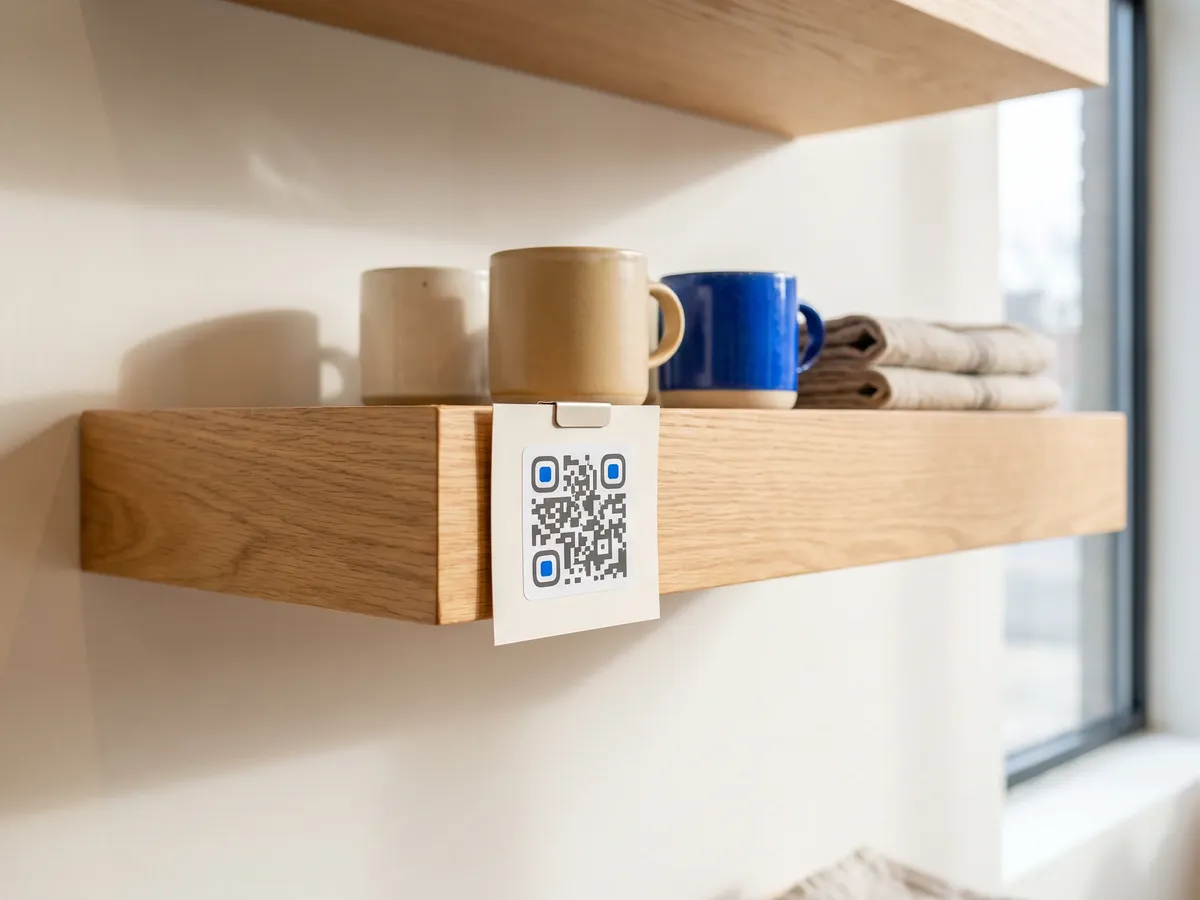
- Put shelf-tag codes on the tag face, not on the strip below the shelf edge where shoppers have to crouch.
- Shelf tags are small. Keep the code at least 2.5 cm wide and give it the full height of the tag rather than squeezing it beside the price.
- Window codes face reflections and sunlight. Print on the inside of the glass with an opaque white backing, and test from the pavement at midday.
- Use one dynamic code per display, not one for the whole store, so you can compare which displays get scanned.
Call-to-action copy
A code with a reason to scan beside it gets more scans than a bare code. Lines to print next to yours:
- Scan for sizes, colours and reviews
- Shop this window, even when we're closed
- Join our rewards club in 10 seconds
- Scan to check stock in other sizes
QR codes for retail stores: FAQ
How do I track which shelf tags get scanned?
Give each tag or display its own dynamic code. QRdx counts scans per code with time, country, city and device, so you can compare displays, see when people scan, and export the data as CSV.
What if a product's web page changes after the tags are printed?
With a dynamic code, change the destination in the dashboard and every printed tag follows. With a static code, the tag points at the old address until you reprint it.
Can I put one QR code on the whole store?
You can, but you lose the detail that makes codes useful in retail. One code per product line or display costs nothing extra to print and tells you what shoppers were looking at when they scanned.